
Israel’s History
Holyland Private Tours By Ofir Horn
Israel’s History
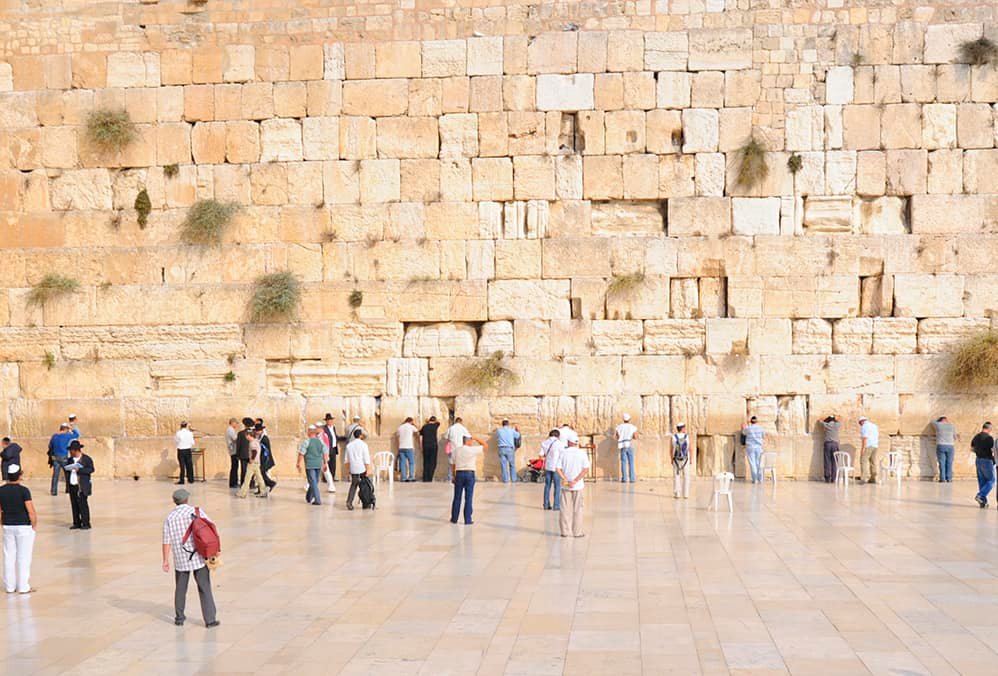
Israel’s history is unlike any other on earth — a story that stretches back four thousand years, woven through the pages of the Bible and written into the very stones of the land. Walking through Israel is walking through Israel history. Every hill, valley, and ancient city carries echoes of the events described below.
The Canaanite Period and the Patriarchs
To understand Israel history, begin here: the land now called Israel was known in ancient times as Canaan — a fertile region at the crossroads of three continents. Around 2000 BC, a man named Abraham left Mesopotamia (modern-day Iraq) and journeyed to Canaan, guided by a divine calling. God made a covenant with Abraham, promising this land to his descendants as an eternal inheritance. Abraham, his son Isaac, and his grandson Jacob — the three patriarchs — settled and wandered through this land. Jacob was later renamed Israel, and his twelve sons became the founders of the Twelve Tribes of Israel.
Egypt, Moses, and the Exodus
Driven by famine, Jacob’s family descended to Egypt, where his son Joseph had risen to become a powerful advisor to Pharaoh. But over generations, the Israelites became enslaved. Around 1200 BC, Moses — one of history’s most towering figures — led the Israelites out of Egypt in the dramatic event known as the Exodus. The parting of the Red Sea, the receiving of the Ten Commandments at Mount Sinai, and forty years of wandering in the desert are all part of this foundational chapter of Israel history, recorded in the Torah and the Bible.
Joshua and the Conquest of Canaan
After Moses died within sight of the Promised Land, his successor Joshua led the Israelites across the Jordan River and into Canaan. The famous battle of Jericho — whose walls famously fell — was among the first. The land was gradually divided among the Twelve Tribes, and for roughly three hundred years, Israel was governed not by kings but by a series of leaders known as the Judges, among them Deborah, Gideon, and Samson.
The United Kingdom: Saul, David, and Solomon
Around 1020 BC, the Israelites demanded a king. Saul became the first, followed by the greatest: King David. David conquered Jerusalem around 1000 BC, declared it the capital of his kingdom, and united all twelve tribes under one rule. His son King Solomon fulfilled his father’s dream by building the magnificent First Temple in Jerusalem — completed around 960 BC — establishing the city as the spiritual center of the Jewish people and a symbol of God’s presence on earth.
The Divided Kingdom and the Babylonian Exile
After Solomon’s death, the kingdom split in two: Israel in the north and Judah in the south. In 722 BC, the Assyrians conquered the northern kingdom, scattering the ten northern tribes. In 586 BC, the Babylonian king Nebuchadnezzar destroyed Jerusalem, burned Solomon’s Temple to the ground, and exiled the Jewish people to Babylon. Yet even in exile, the Jewish people preserved their faith, their Torah, and their longing to return.
Return, the Maccabees, and Herod’s Temple
In 538 BC, the Persian king Cyrus the Great permitted the Jewish exiles to return to their land. The Second Temple was built in Jerusalem by 516 BC. Centuries later, in 167 BC, the Seleucid king Antiochus attempted to outlaw Jewish practice — an act of oppression that ignited the Maccabean revolt. The Maccabees, a small band of Jewish warriors, miraculously recaptured the Temple. Their victory is celebrated to this day as Hanukkah. Later, King Herod the Great expanded the Temple into one of the ancient world’s most spectacular structures, much of whose retaining wall — the Western Wall — still stands in Jerusalem today.
Jesus of Nazareth
It was in this same land, during the Roman period, that Jesus of Nazareth was born, lived, taught, and was crucified. The sites of his birth in Bethlehem, his ministry in the Galilee, his final days in Jerusalem, and the Church of the Holy Sepulchre — believed to mark the location of his crucifixion and resurrection — draw millions of Christian pilgrims to Israel every year.
The Destruction of the Second Temple and the Great Exile
In 70 AD, the Roman army under General Titus crushed a Jewish revolt and destroyed the Second Temple — an event that shook the Jewish world to its core and marks one of the darkest chapters in all of Israel history. The majority of Jews were scattered across the Roman Empire and beyond, beginning nearly two thousand years of exile. Yet throughout the centuries, Jewish communities in Europe, the Middle East, and beyond never abandoned their connection to the land of Israel, praying three times daily facing Jerusalem: “Next year in Jerusalem.” Learn more at the Jewish Virtual Library.
The Return and the Modern State
The 19th and 20th centuries brought the Zionist movement — a call for the Jewish people to return to their ancient homeland. Wave after wave of Jewish immigrants arrived in the land, then under Ottoman and later British rule. On May 14, 1948, Israel history reached a turning point: the State of Israel was declared, fulfilling a 2,000-year-old dream. The Bible had called it. History had preserved it. And the land itself — every stone, every hill, every ancient road — tells the story.
Come and Walk Through History
Visiting Israel is not just a trip — it is a journey through the most consequential story ever told. Come and experience Israel history in person: walk in the footsteps of Abraham, Moses, David, Solomon, and Jesus. Contact us here to start planning your private tour.