
Category: Tour and Travel
Israel’s Population
Holyland Private Tours By Ofir Horn
Israel’s Population

Israel’s population reached a historic milestone at the start of 2026 — surpassing 10 million residents for the first time. According to Israel’s Central Bureau of Statistics, the country now counts 10.178 million people, a testament to decades of immigration, high birth rates, and relentless growth. Few countries of Israel’s size offer such extraordinary human diversity, and understanding the Israel population is key to understanding the country itself.
Israel Population in Numbers
As of early 2026, Israel’s population stands at 10.178 million — up from 9.1 million just a few years ago. Jews and others make up 76.3% of the population (approximately 7.771 million), Arab citizens account for 21.1% (2.147 million), and foreign nationals make up 2.6%. The country’s population grows at a rate of 1.1% per year, driven by approximately 182,000 births annually. Life expectancy is 82.7 years — well above the global average of 73.8 years.
A Young and Growing Nation
One of the most striking features of the Israel population is its youth. The median age is around 30 years — remarkably low for a developed economy, and a sharp contrast to aging populations across Europe. Israel’s fertility rate stands at 2.85 children per woman, well above the replacement level of 2.1, making it one of the only developed countries sustaining natural population growth. Since the State was founded in 1948, Israel’s population has grown more than tenfold — from under a million to over ten million today. For the latest figures, visit the Israel Central Bureau of Statistics.
Israel’s Jewish Community
The Jewish population of Israel is itself a mosaic. Since 1948, over 3 million Jewish immigrants have arrived from more than 130 countries, each wave leaving its mark on Israeli culture, cuisine, language, and society.
The major waves of immigration — known in Hebrew as Aliyah — include: 700,000 arrivals between 1948–1951 (doubling the population overnight); 350,000 from North Africa and Romania in the 1950s–60s; and nearly 900,000 from the former Soviet Union in the early 1990s, the largest single wave. An additional 60,000 arrived from Ethiopia through dramatic airlifts — Operation Moses and Operation Solomon — becoming one of the most moving chapters in modern Israeli history.
Today, 79.7% of Israeli Jews were born in Israel. Religious observance varies widely: Ultra-Orthodox (Haredi) Jews make up around 12% of the Jewish population, religious Jews 10%, traditional 35%, and secular Jews 43%.
Israel’s Arab Citizens
Arab citizens form the largest non-Jewish group in Israel, comprising about 21% of the total Israel population. Most live in Arab towns and villages across the Galilee, the coastal plain, and the northern Negev. They are also well-represented in mixed cities such as Jerusalem, Haifa, Akko, and Ramle.
The majority of Arab citizens are Sunni Muslim. About 10% are Christian Arabs, mostly Greek Orthodox. The Bedouin — Muslim Arabs with a traditional nomadic heritage — now live primarily in permanent communities in the northern Negev.
The Druze
The Druze are a unique community whose faith developed from Shia Islam in the 11th century. Around 145,000 Druze live in Israel today, concentrated in 17 villages on Mount Carmel, in the Galilee, and on the Golan Heights. The Druze maintain a proud tradition of service in the Israeli military and are known for their fierce loyalty to the State of Israel.
The Circassians
A small but distinctive community, the Circassians are Muslim but ethnically non-Arab, originating from the Caucasus region. When Russia conquered their homeland in the 19th century, many fled to the Ottoman Empire — and some settled in the Land of Israel. Today, approximately 4,000 Circassians live in the villages of Kfar Kama and Rehaniya in the Galilee.
The Samaritans
One of the world’s oldest and smallest religious communities, the Samaritans trace their origins to the ancient Kingdom of Israel. Following the Assyrian conquest in 722 BC, those who remained in the land developed a distinct identity, preserving an ancient form of the Torah. Today, only about 800 Samaritans remain in the world, divided between the city of Nablus (in the Palestinian Authority) and Holon, near Tel Aviv.
Where Israelis Live
Israel is a highly urbanized country — over 91% of its population lives in cities and towns. About a quarter of the population lives in one of the four major cities: Jerusalem (the capital, with over 980,000 residents in the city proper), Tel Aviv, Haifa, and Rishon LeZion. The greater Tel Aviv metropolitan area is home to over 4 million people — roughly 40% of the entire Israel population.
Two agricultural settlement forms unique to Israel are the kibbutz (a communal settlement based on shared ownership) and the moshav (a cooperative farming village combining private ownership with collective support). Both have undergone major reforms since the 1990s, with most kibbutzim partially privatized today.
A Nation of Immigrants — and a Land for Visitors
Israel’s extraordinary demographic story — ancient roots, dramatic returns, and ongoing renewal — is part of what makes visiting the country so compelling. Every community you encounter on a tour of Israel carries a unique history and a living culture. Contact us to plan a private tour and meet the people who make this land unlike any other.
The Economy of Israel
Holyland Private Tours By Ofir Horn
The Economy of Israel

The Israel economy is one of the most remarkable success stories in modern history. Few countries have built a thriving economy under the conditions Israel has faced — virtually no natural resources, a small domestic market, and decades of security challenges. Yet the Israel economy has emerged as one of the most dynamic and innovative on the planet, a story that visitors often find as compelling as the country’s ancient history.
The Israel Economy in Numbers
Israel’s GDP reached $540 billion in 2024 — a figure that would have been unimaginable at the country’s founding in 1948, when annual exports barely touched $30 million. GDP per capita stands at around $42,000, placing Israel firmly among the world’s high-income economies. After a challenging 2024 shaped by the war’s economic impact, the Israel economy rebounded strongly with 2.9% growth in 2025.
From Citrus Groves to Cybersecurity
The early Israel economy ran on agriculture and diamonds. Today, it runs on ideas. High-tech exports reached $78 billion in 2024 — accounting for 57% of all Israeli exports, the highest share ever recorded. The transformation from an agrarian economy to a global technology powerhouse happened in roughly two generations.
The engine behind this shift? A combination of world-class universities, compulsory military service that builds technical and leadership skills, and a culture that treats failure as a stepping stone rather than a stigma.
“Startup Nation” — More Than a Nickname
Israel is home to over 21,900 startups, with 42 unicorn companies collectively valued in the tens of billions of dollars. In 2024, the Israel economy ranked as the world’s 5th-largest startup hub, with $10.6 billion raised — behind only San Francisco, New York, London, and Boston. For a country of just 10 million people, that’s extraordinary.
Cybersecurity is the crown jewel: it accounted for 36% of total tech funding in 2024, driven by decades of military intelligence expertise flowing directly into the private sector.
Resilience as a National Trait
The OECD’s 2025 Israel Economic Survey noted that in its 2025 Israel survey that the Israel economy showed remarkable resilience to the shock of the October 7th attacks and the subsequent war — strength rooted in sound fiscal foundations, stable financial institutions, and a vibrant high-tech sector.
That resilience isn’t just economic data — it’s something you sense when you travel here. The markets are full, the restaurants are busy, the startups are hiring. Understanding the Israel economy adds a layer of depth to any visit: you begin to see not just where history happened, but where the future is being built.
What Israel’s Economy Means for Travelers
When you walk through Tel Aviv’s Rothschild Boulevard, browse the stalls of Mahane Yehuda market in Jerusalem, or visit a Galilee winery, you’re experiencing the Israel economy firsthand. Tourism itself contributes billions to GDP annually, and the infrastructure built around it — hotels, restaurants, transportation — reflects the same drive for quality and innovation that defines Israeli tech. Visiting Israel isn’t just a historical journey; it’s a front-row seat to one of the world’s most compelling economic transformations.
Planning a visit? Explore our Jerusalem private tours and experience this remarkable country firsthand.
Israel’s History
Holyland Private Tours By Ofir Horn
Israel’s History
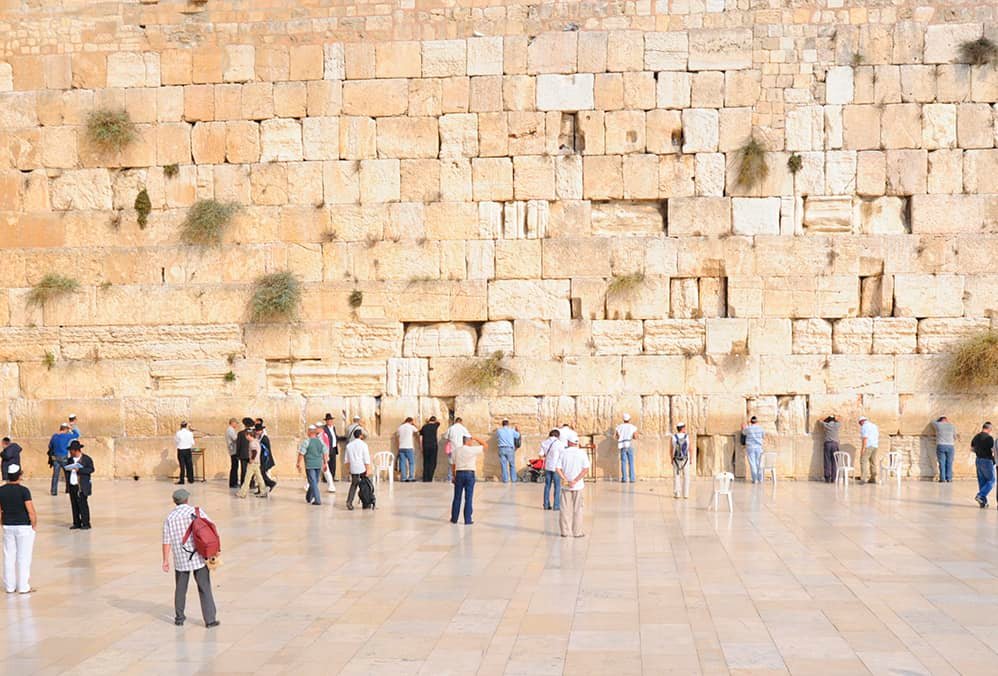
Israel’s history is unlike any other on earth — a story that stretches back four thousand years, woven through the pages of the Bible and written into the very stones of the land. Walking through Israel is walking through Israel history. Every hill, valley, and ancient city carries echoes of the events described below.
The Canaanite Period and the Patriarchs
To understand Israel history, begin here: the land now called Israel was known in ancient times as Canaan — a fertile region at the crossroads of three continents. Around 2000 BC, a man named Abraham left Mesopotamia (modern-day Iraq) and journeyed to Canaan, guided by a divine calling. God made a covenant with Abraham, promising this land to his descendants as an eternal inheritance. Abraham, his son Isaac, and his grandson Jacob — the three patriarchs — settled and wandered through this land. Jacob was later renamed Israel, and his twelve sons became the founders of the Twelve Tribes of Israel.
Egypt, Moses, and the Exodus
Driven by famine, Jacob’s family descended to Egypt, where his son Joseph had risen to become a powerful advisor to Pharaoh. But over generations, the Israelites became enslaved. Around 1200 BC, Moses — one of history’s most towering figures — led the Israelites out of Egypt in the dramatic event known as the Exodus. The parting of the Red Sea, the receiving of the Ten Commandments at Mount Sinai, and forty years of wandering in the desert are all part of this foundational chapter of Israel history, recorded in the Torah and the Bible.
Joshua and the Conquest of Canaan
After Moses died within sight of the Promised Land, his successor Joshua led the Israelites across the Jordan River and into Canaan. The famous battle of Jericho — whose walls famously fell — was among the first. The land was gradually divided among the Twelve Tribes, and for roughly three hundred years, Israel was governed not by kings but by a series of leaders known as the Judges, among them Deborah, Gideon, and Samson.
The United Kingdom: Saul, David, and Solomon
Around 1020 BC, the Israelites demanded a king. Saul became the first, followed by the greatest: King David. David conquered Jerusalem around 1000 BC, declared it the capital of his kingdom, and united all twelve tribes under one rule. His son King Solomon fulfilled his father’s dream by building the magnificent First Temple in Jerusalem — completed around 960 BC — establishing the city as the spiritual center of the Jewish people and a symbol of God’s presence on earth.
The Divided Kingdom and the Babylonian Exile
After Solomon’s death, the kingdom split in two: Israel in the north and Judah in the south. In 722 BC, the Assyrians conquered the northern kingdom, scattering the ten northern tribes. In 586 BC, the Babylonian king Nebuchadnezzar destroyed Jerusalem, burned Solomon’s Temple to the ground, and exiled the Jewish people to Babylon. Yet even in exile, the Jewish people preserved their faith, their Torah, and their longing to return.
Return, the Maccabees, and Herod’s Temple
In 538 BC, the Persian king Cyrus the Great permitted the Jewish exiles to return to their land. The Second Temple was built in Jerusalem by 516 BC. Centuries later, in 167 BC, the Seleucid king Antiochus attempted to outlaw Jewish practice — an act of oppression that ignited the Maccabean revolt. The Maccabees, a small band of Jewish warriors, miraculously recaptured the Temple. Their victory is celebrated to this day as Hanukkah. Later, King Herod the Great expanded the Temple into one of the ancient world’s most spectacular structures, much of whose retaining wall — the Western Wall — still stands in Jerusalem today.
Jesus of Nazareth
It was in this same land, during the Roman period, that Jesus of Nazareth was born, lived, taught, and was crucified. The sites of his birth in Bethlehem, his ministry in the Galilee, his final days in Jerusalem, and the Church of the Holy Sepulchre — believed to mark the location of his crucifixion and resurrection — draw millions of Christian pilgrims to Israel every year.
The Destruction of the Second Temple and the Great Exile
In 70 AD, the Roman army under General Titus crushed a Jewish revolt and destroyed the Second Temple — an event that shook the Jewish world to its core and marks one of the darkest chapters in all of Israel history. The majority of Jews were scattered across the Roman Empire and beyond, beginning nearly two thousand years of exile. Yet throughout the centuries, Jewish communities in Europe, the Middle East, and beyond never abandoned their connection to the land of Israel, praying three times daily facing Jerusalem: “Next year in Jerusalem.” Learn more at the Jewish Virtual Library.
The Return and the Modern State
The 19th and 20th centuries brought the Zionist movement — a call for the Jewish people to return to their ancient homeland. Wave after wave of Jewish immigrants arrived in the land, then under Ottoman and later British rule. On May 14, 1948, Israel history reached a turning point: the State of Israel was declared, fulfilling a 2,000-year-old dream. The Bible had called it. History had preserved it. And the land itself — every stone, every hill, every ancient road — tells the story.
Come and Walk Through History
Visiting Israel is not just a trip — it is a journey through the most consequential story ever told. Come and experience Israel history in person: walk in the footsteps of Abraham, Moses, David, Solomon, and Jesus. Contact us here to start planning your private tour.